Home /
2026.10.08 -

How to Choose Between 0.5mm and 1.0mm Geomembrane

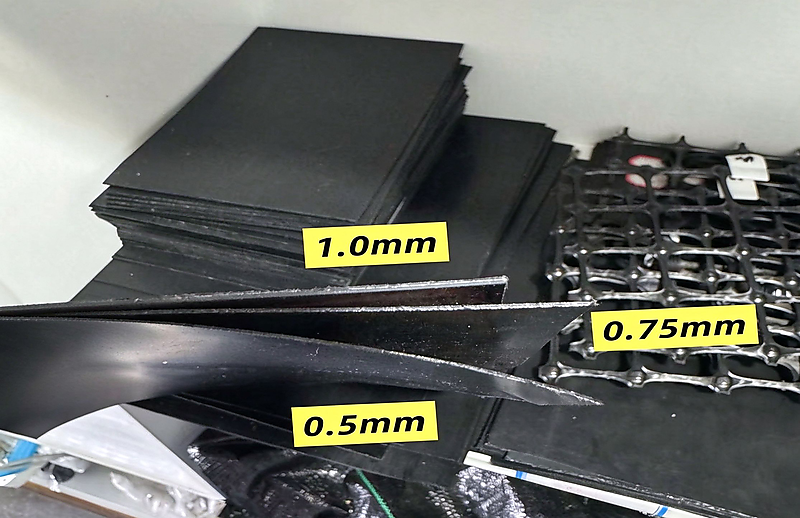
I. The difference between 0.5 mm and 1.0 mm

Comparison Item 0.5mm 1.0mm
Weight per ㎡ 0.47kg 0.94kg
Puncture resistance Average Strong
Water depth capacity Within 2 meters Around 5 meters
Welding difficulty Thin; prone to burn-through leaks Thick; stable seams
Typical uses Small fish ponds, lotus ponds,temporary seepage control Water storage tanks,manure pits, landscape lakes


II. Beyond Price: Four Critical Factors for Liner Thickness Decision-Making

1.Puncture Resistance: Main Source of Leakage
Sharp debris (stones, roots, hard clods) causes most puncture leaks, not water pressure. 0.5mmgeomembrane has ~50% puncture strength of 1.0mm. For rocky subgrade, avoid thinner liner orprepare subgrade. Add geotextile under the liner for poor base.
2.Water Depth: Core Selection Index
Higher water depth brings greater pressure. Reference: 0.5mm for ≤2m depth; ≥0.75mm for over 3m;1.0mm for 5m deep water.
3.Weld Stability: Thicker Liners Are More Weld-Friendly
Thin 0.5mm liner is easy to burn through during welding and needs skilled workers. 1.0mm linerhas higher tolerance and reliable welds. Weld seams are the weakest part of anti-seepage projects.Hire experienced installers.
4.Service Life: Thicker Liners Have Better Durability
UV exposure ages geomembrane from surface. In identical environments, 1.0mm geomembrane lasts far longer than 0.5mm. Service life changes with working conditions.
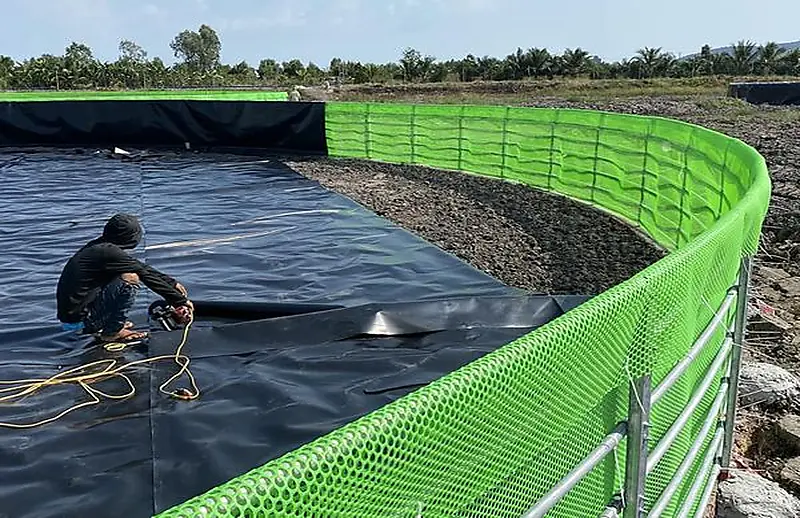
How to Choose Geomembrane

III. How to Select the Right Geomembrane Thickness for Your Application

Application

Recommended Thickness

Note
Small fish pond, lotus pond,shrimp pond (≥2m) 0.5mm Suitable for low-pressure and shallow water conditions.
Intensive fish pond, water reservoir 0.5-0.75mm Water depth 2-3m, select based on subgrade conditions.
Medium storage pond,landscape lake 0.75-1.0mm Higher thickness recommended for deep water conditions.
Manure pond, biogas slurry pond Starting from 1.0mm Higher anti-seepage reliability required for corrosive media.
Biogas tank base liner 1.0-1.5mm Long-term contact with biogas slurry, thicker liner recommended.
Oxidation pond, wastewater pond 1.0mm or above Higher chemical corrosion resistance required.
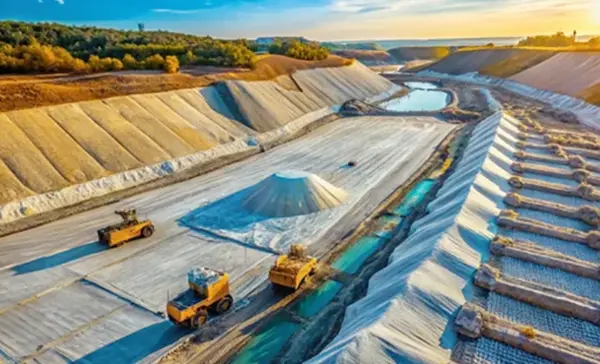
Landfill, tailings pond 1.5-2.0mm High standard anti-seepage, follow design or tender requirements.


Ⅳ. Confirm These 3 Key Points

1. Water Depth?
Sets minimum liner thickness
2. Stored Medium?
Clean water / manure / chemicals, different,requirements
3. Subgrade Condition?
Check gravel, confirm if geotextile protection is ronuirod

The Bottom Line

  • Go 0.5mm if you’re lining a pond, fish farm, or light-duty waterproofing job on smooth ground.
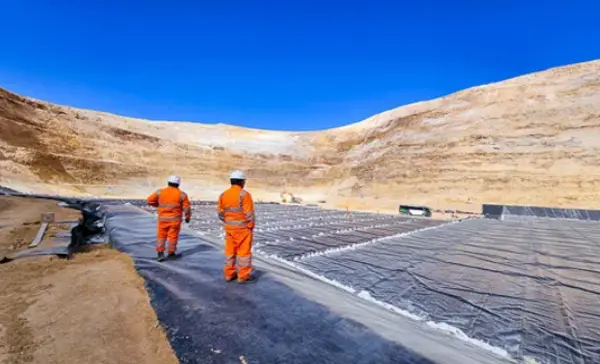
  • Go 1.0mm if it’s a landfill, mining pad, wastewater lagoon, or any long-term containment where failure is not an option.

Not sure which thickness your project calls for? Send us your application details and subgrade conditions — we’ll help you spec the right liner at the right price.

View Product
Contact Us

Our Latest News
How to Choose Between 0.5mm and 1.0mm Geomembrane
Choosing the right geomembrane thickness is one of the most common — and most costly — mistakes in lining projects. Pick too thin, and you risk premature leakage and replacement. Pick too thick, and you waste money on material you don't need. The 0.5mm and 1.0mm HDPE geomembrane are two of the most widely stocked liners in the market. But which one fits your project? The answer depends on what you're lining, the ground conditions, and how long the liner needs to last. In this guide, we'll break down the key differences between 0.5mm and 1.0mm geomembrane — including cost, durability, typical applications, and welding considerations — so you can make the right call on your next order.
read more
GEOMEMBRANE THICKNESS SELECTION
Geomembrane Thickness Selection Guide for Anti-seepage Projects
For water storage basins, fish ponds, and artificial lakes, the long-term operation and maintenance costs resulting from leakage often far exceed the initial investment in anti-seepage construction. The primary goal of anti-seepage measures for these water bodies is to retain water and minimize loss, rather than merely meeting acceptance inspection standards. Properly installing anti-seepage materials to block leakage at the source—thereby avoiding the need for repeated refilling, preventing reduced aquaculture yields, and averting economic losses—is a critical step that cannot be overlooked in such projects.
read more
Non-Woven Geotextile Fabric
Non-Woven Geotextile Fabric: Superior Drainage
In the realm of modern civil engineering and environmental protection, the choice of materials determines the longevity and safety of infrastructure. Non-Woven Geotextile Fabric has emerged as a cornerstone material for engineers seeking high-performance solutions in soil stabilization, filtration, and drainage.
read more
Dingkun geomembrane
A Complete Guide to Containment & Protection | Dingkun Geosynthetics
In modern engineering construction, the efficient and sustainable prevention of uncontrolled seepage of liquids and gases is essential for protecting the ecological environment and ensuring project quality. Geomembranes undoubtedly play a key role in these highly challenging seepage control projects. In this guide, Dingkun Geosynthetics, a leading Chinese manufacturer of geosynthetics, will provide an in-depth analysis of geomembrane materials, classifications, core applications and how to select a high-quality geomembrane suitable for your project.
read more
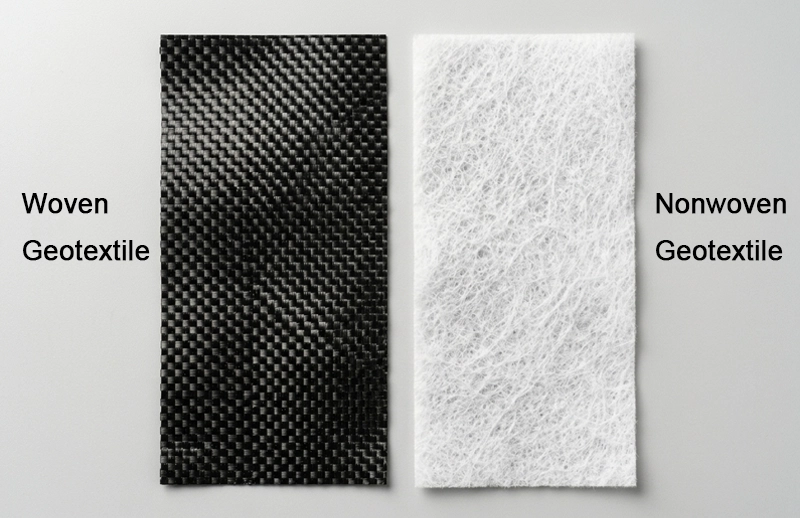
Woven vs. Non-Woven Geotextile
Woven vs. Non-Woven Geotextile: Which One is Right for Your Project?
Confused about choosing between woven and non-woven geotextile? Discover the key differences in strength, drainage, and applications to find the perfect solution for your project.
read more
Installation method for Geocells
Installation method for geocells slope erosion control
Geocell is a revolutionary three-dimensional cellular confinement system made from high-density polyethylene (HDPE) or other advanced polymer alloys.
read more
types of geomembrane-9
Types of Geomembrane
Geomembranes are synthetic membranes used as impermeable barriers in geotechnical engineering. They come in various materials, each with distinct properties suited for different applications.The four most common types of geomembranes are high-density polyethylene (HDPE), low-density polyethylene (LDPE), linear low-density polyethylene (LLDPE), and Polyvinyl Chloride (PVC).
read more
Geomembrane Uses
Geomembrane Uses
Geomembrane excellent waterproofing and containment properties,they are widely used in various engineering and environmental applications
read more
Message