Dingkun Geotextile banner-4
Geotextile
2026.05.14 - Geotextile

Woven vs. Non-Woven Geotextile: Which One is Right for Your Project?

1. What is Woven Geotextile?
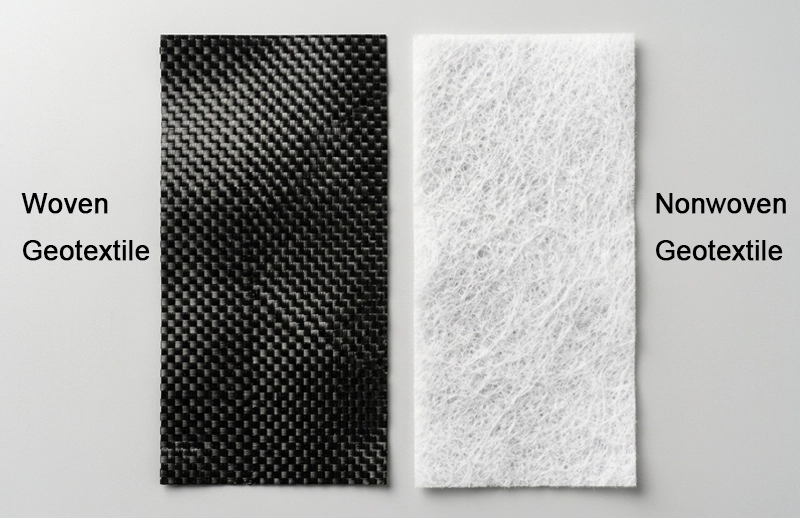
Woven geotextiles are created by weaving synthetic fibers (usually polypropylene) together on a loom. This process creates a fabric that is extremely strong but has low permeability.
Key Strength: High load capacity and tensile strength.
Best For: Soil reinforcement, road stabilization, and heavy-duty parking lots.
Limitation: Poor drainage (filtration) compared to non-woven options.

2. What is Non-Woven Geotextile? 
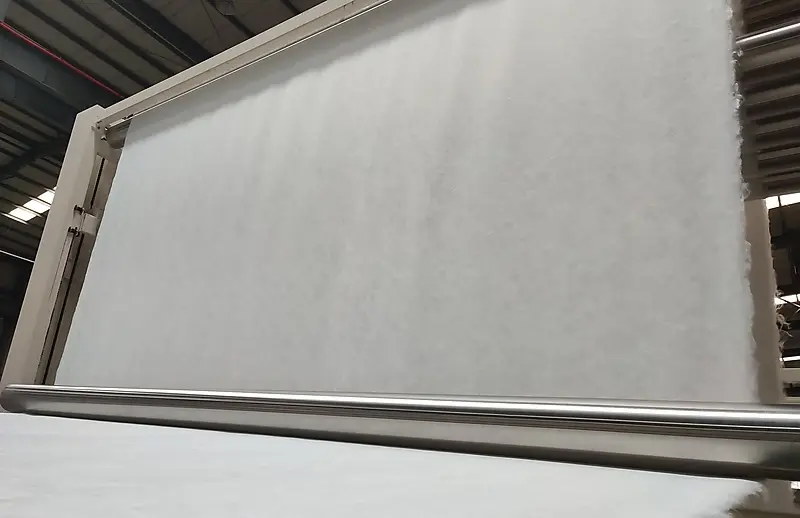
Non-woven geotextiles are made by bonding fibers together using heat, chemicals, or needle-punching. The result is a felt-like fabric that allows water to pass through easily.
Key Strength: Excellent filtration, drainage, and permeability.
Best For: French drains, erosion control, and landfill filtration systems.
Limitation: Lower tensile strength compared to woven fabrics.

3. Comparison at a Glance

Feature Woven Geotextile Non-Woven Geotextile
Manufacturing Weaving fibers on a loom Needle-punched or thermal bonding
Permeability Low (Water flows slowly) High (Water flows freely)
Tensile Strength Very High (Great for heavy loads) Medium to Low
Main Function Reinforcement & Separation Drainage & Filtration
Common Uses Roads, Runways, Rail tracks Drains, Rip-rap, Pond underlayment

4. How to Choose? 
When deciding which geotextile to purchase, ask yourself two main questions:
Do I need to reinforce the ground? If your project involves heavy traffic or stabilizing soft soil for a road, Woven Geotextile is your best bet.
Do I need water to flow through? If you are building a drainage system or protecting a geomembrane from puncture while allowing water passage, Non-Woven Geotextile is the professional choice.

Conclusion: Partner with a Pro
At Dingkun, we provide both high-quality woven and non-woven geotextiles that meet international engineering standards. Still not sure? Our engineering team offers free consultations to help you select the exact specifications for your site conditions.

[Link: View Our Geotextile Product Range]
[Link: Get a Free Sample & Price Quote]

Our Latest News
How to Choose Between 0.5mm and 1.0mm Geomembrane
Choosing the right geomembrane thickness is one of the most common — and most costly — mistakes in lining projects. Pick too thin, and you risk premature leakage and replacement. Pick too thick, and you waste money on material you don't need. The 0.5mm and 1.0mm HDPE geomembrane are two of the most widely stocked liners in the market. But which one fits your project? The answer depends on what you're lining, the ground conditions, and how long the liner needs to last. In this guide, we'll break down the key differences between 0.5mm and 1.0mm geomembrane — including cost, durability, typical applications, and welding considerations — so you can make the right call on your next order.
read more
GEOMEMBRANE THICKNESS SELECTION
Geomembrane Thickness Selection Guide for Anti-seepage Projects
For water storage basins, fish ponds, and artificial lakes, the long-term operation and maintenance costs resulting from leakage often far exceed the initial investment in anti-seepage construction. The primary goal of anti-seepage measures for these water bodies is to retain water and minimize loss, rather than merely meeting acceptance inspection standards. Properly installing anti-seepage materials to block leakage at the source—thereby avoiding the need for repeated refilling, preventing reduced aquaculture yields, and averting economic losses—is a critical step that cannot be overlooked in such projects.
read more
Non-Woven Geotextile Fabric
Non-Woven Geotextile Fabric: Superior Drainage
In the realm of modern civil engineering and environmental protection, the choice of materials determines the longevity and safety of infrastructure. Non-Woven Geotextile Fabric has emerged as a cornerstone material for engineers seeking high-performance solutions in soil stabilization, filtration, and drainage.
read more
Dingkun geomembrane
A Complete Guide to Containment & Protection | Dingkun Geosynthetics
In modern engineering construction, the efficient and sustainable prevention of uncontrolled seepage of liquids and gases is essential for protecting the ecological environment and ensuring project quality. Geomembranes undoubtedly play a key role in these highly challenging seepage control projects. In this guide, Dingkun Geosynthetics, a leading Chinese manufacturer of geosynthetics, will provide an in-depth analysis of geomembrane materials, classifications, core applications and how to select a high-quality geomembrane suitable for your project.
read more
Woven vs. Non-Woven Geotextile
Woven vs. Non-Woven Geotextile: Which One is Right for Your Project?
Confused about choosing between woven and non-woven geotextile? Discover the key differences in strength, drainage, and applications to find the perfect solution for your project.
read more
Installation method for Geocells
Installation method for geocells slope erosion control
Geocell is a revolutionary three-dimensional cellular confinement system made from high-density polyethylene (HDPE) or other advanced polymer alloys.
read more
types of geomembrane-9
Types of Geomembrane
Geomembranes are synthetic membranes used as impermeable barriers in geotechnical engineering. They come in various materials, each with distinct properties suited for different applications.The four most common types of geomembranes are high-density polyethylene (HDPE), low-density polyethylene (LDPE), linear low-density polyethylene (LLDPE), and Polyvinyl Chloride (PVC).
read more
Geomembrane Uses
Geomembrane Uses
Geomembrane excellent waterproofing and containment properties,they are widely used in various engineering and environmental applications
read more
Message