Geocell Road Construction
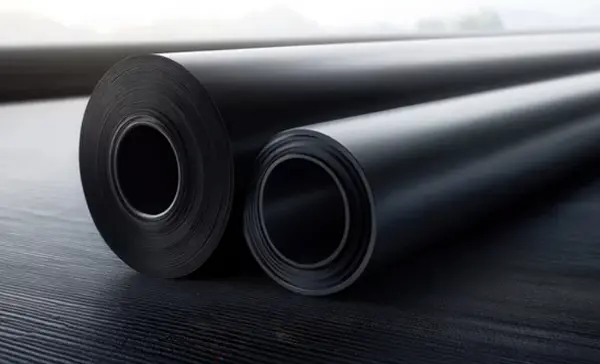
Material: HDPE
Height: 50mm-300mm
Welding distance: 330mm-1000mm


Geocell Road Construction
In the modern era of infrastructure development, the demand for sustainable, cost-effective, and high-performance road construction methods is higher than ever. Such as subgrade deformation, rutting, erosion, and high maintenance requirements. In projects constructed on soft soils or inadequately compacted foundations, conventional granular layers frequently fail to provide sufficient support. The incorporation of geosynthetics in road engineering offers an effective solution by stabilizing the base layer and enhancing overall structural performance. Geocell technology (also known as cellular confinement systems) has emerged geosynthetic solution designed to enhance the structural integrity of paved and unpaved roads.
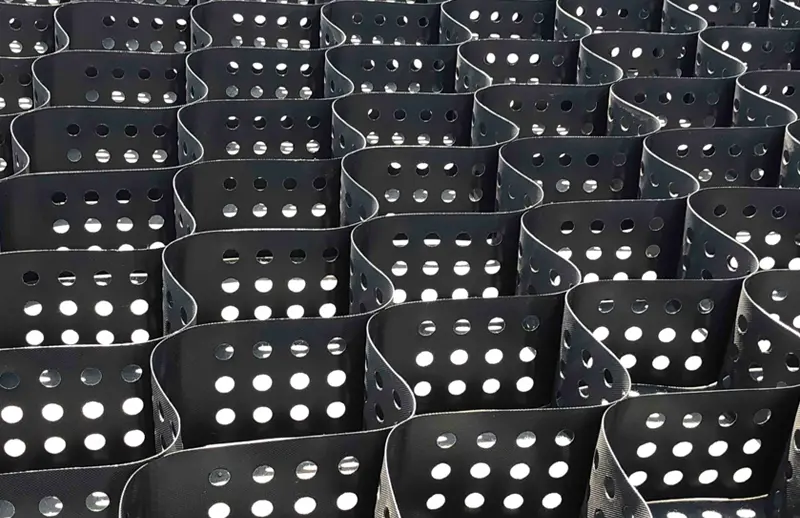
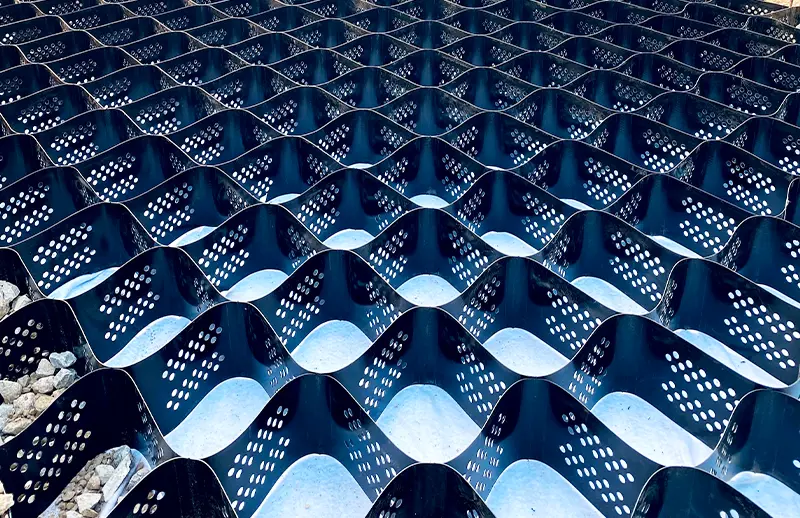
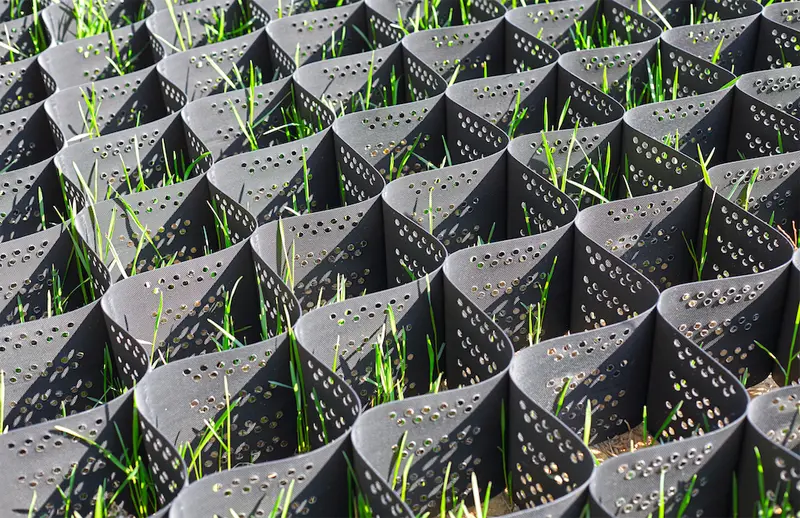
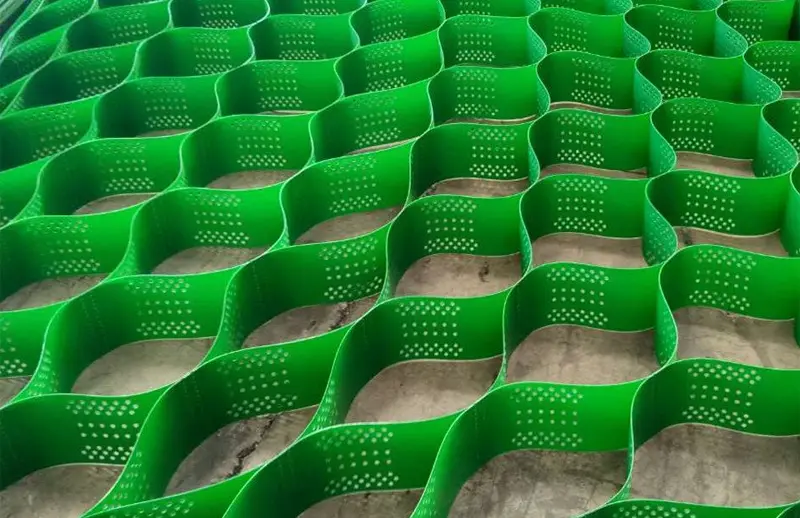
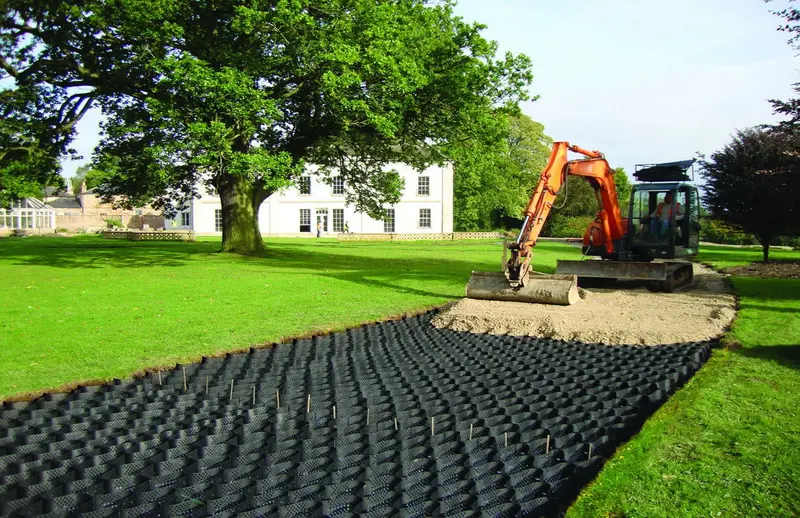
By providing a three-dimensional confinement system, Geocells transform ordinary infill materials—such as soil, sand, or gravel—into a robust, load-bearing matrix. This technology is the ideal choice for contractors and engineers looking to extend the lifespan of roadways while significantly reducing construction and maintenance costs.
Geocell systems are specifically designed to address issues related to inadequate load distribution caused by weak or variable subgrade conditions. By applying three-dimensional confinement, these systems increase the stiffness of infill materials and restrict lateral movement. This mechanism significantly improves load-bearing capacity and minimizes deformation under repeated traffic loading.
geocell road construction
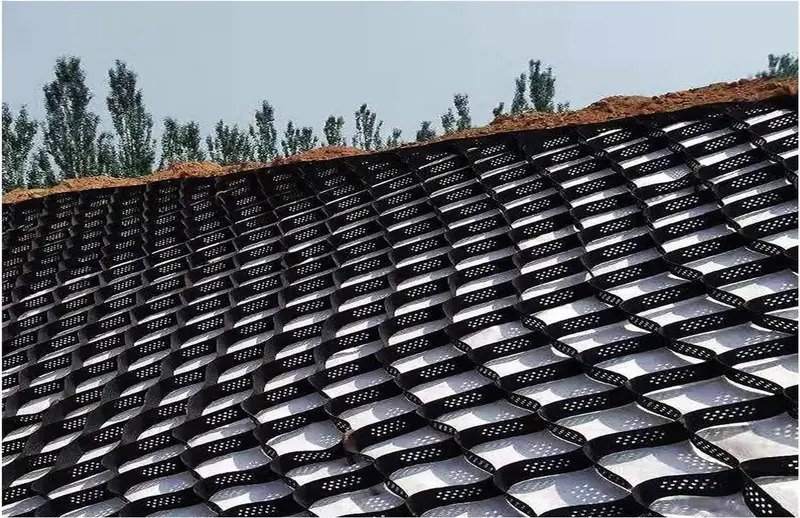
geocell road construction
Geocell Road Construction
| Index Properties | Test Method | Units | Values | ||||||||||||
| Material | 100% Virgin HDPE | ||||||||||||||
| Carbon Black Content | ASTM D 1603 | % | ≥1.5 | ||||||||||||
| Density | ASTM D 1505 | g/cm3 | 0.935-0.965 | ||||||||||||
| Sheet Thickness +5% | ASTM D 5199 | mm | 1.5 | ||||||||||||
| Seam Peel Strength | USACE GL-86-19 | KN/m | ≥14.2 | ||||||||||||
| Tensile Strength at Yield | ASTM D 638 | KN/m | ≥22 | ||||||||||||
| Environmental Stress Crack Resistance ESCR | ASTM D 1693 | hrs | ≥5000 | ||||||||||||
| Oxidation Induction Time OlT | ASTM D 3895 | min | ≥150 | ||||||||||||
| Type No. | DK330 | DK356 | DK445 | DK660 | DK712 | ||||||||||
| Welding Distance(mm)3% | 330 | 356 | 445 | 660 | 712 | ||||||||||
| Cell Depth(mm)+3% | 50,75, 100,150,200,250 | ||||||||||||||
| Dimensions | |||||||||||||||
| Expanded Cell Size (widthxlength)(mm)+3% | 250×210 | 260 x225 | 320 x 288 | 470×450 | 510×475 | ||||||||||
| Expanded Cell Numbers (widthxlength) | 10×34 | 9 x 34 | 8 x 34 | 5 x34 | 5 x 34 | ||||||||||
| Expanded Section Size (widthxlength)(m)+3% | 2.50 x7.14 | 2.34 x 7.65 | 2.56 x 9.8 | 2.35 x 15.3 | 2.55 x 16.15 | ||||||||||
| Expanded Section Area (m2)+5% | 17.85 | 17.9 | 25.1 | 36 | 41.2 | ||||||||||
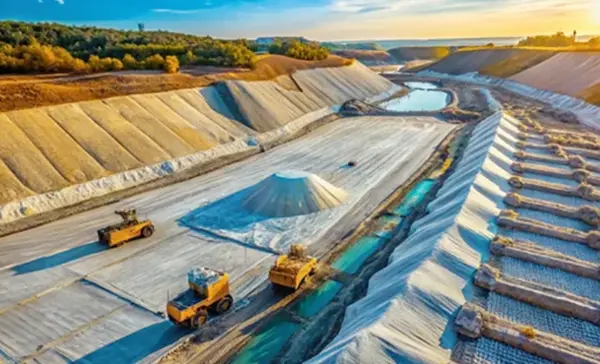
Geocells demonstrate considerable adaptability, rendering them applicable across diverse scenarios in road construction. Whether for major highways or minor rural roads, they offer reliable means of soil stabilization and contribute to prolonged infrastructure service life.
Base Course Reinforcement
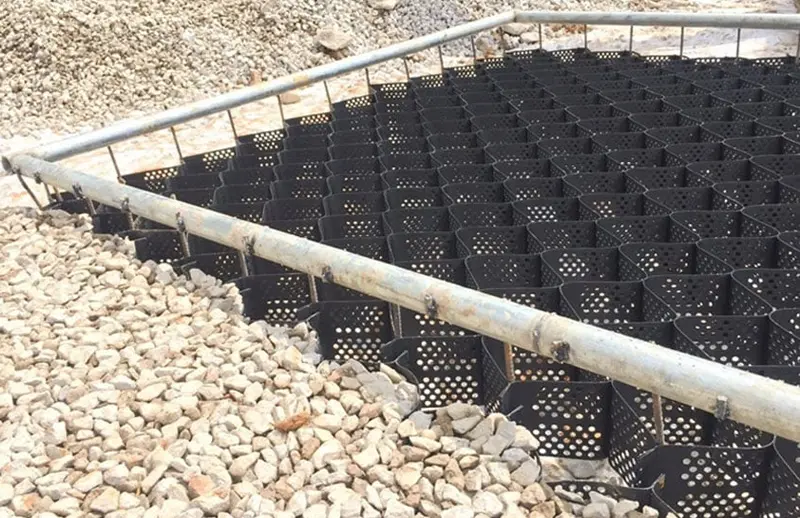
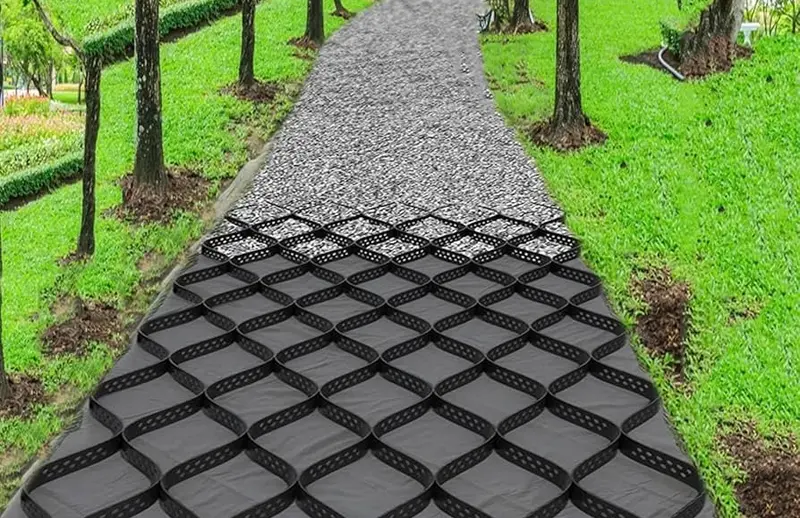
Through the formation of a mechanically stabilized layer, geocells effectively support substantial traffic loads, positioning them as suitable for highways, urban thoroughfares, and airfield pavements. This application enables roadways to accommodate high-density traffic while preserving long-term structural integrity.
Slope and Embankment Protection
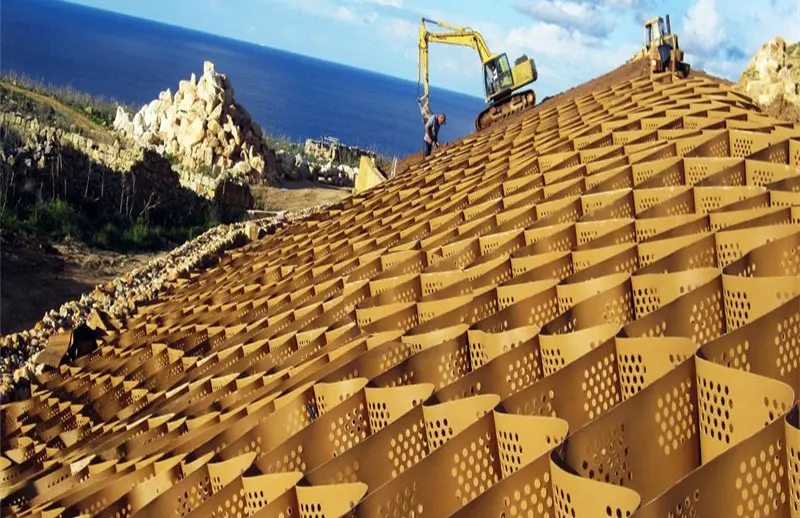
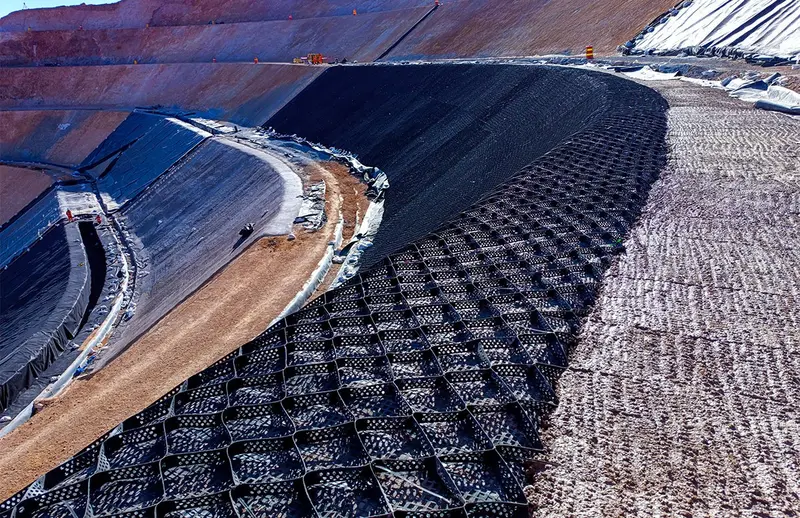
Geocells serve as an efficient measure against soil erosion on slopes and embankments. By providing confinement to the earthen materials, they mitigate the occurrence of landslides and washouts, particularly in areas characterized by steep terrain.
Soft Ground Improvement
Construction over weak subgrades traditionally necessitates extensive excavation and fill. Geocells streamline this process by reinforcing the existing soil, facilitating road development in marshy or clay-dominated zones without the need for additional aggregate layers.
Retaining Wall Stabilization
Beyond their role in pavement structures, geocells are employed to bolster retaining walls, ensuring their stability against lateral earth pressures. This use proves especially advantageous in hilly or mountainous regions where landslides present persistent challenges.
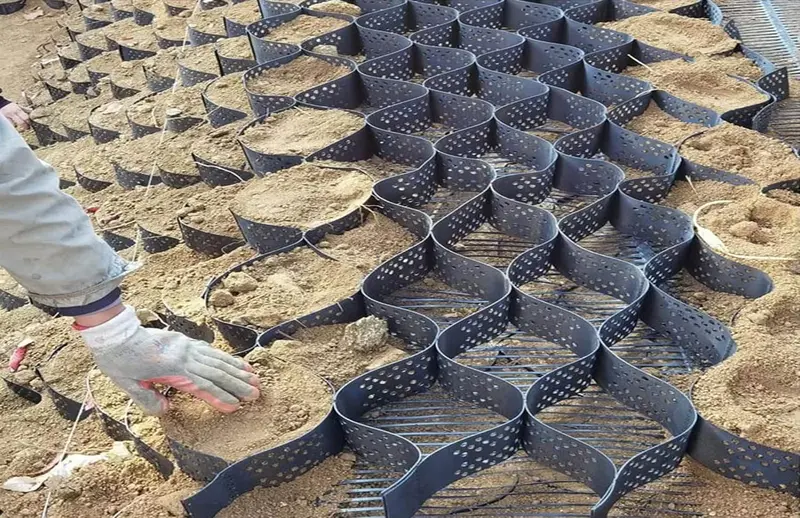
geocell road construction
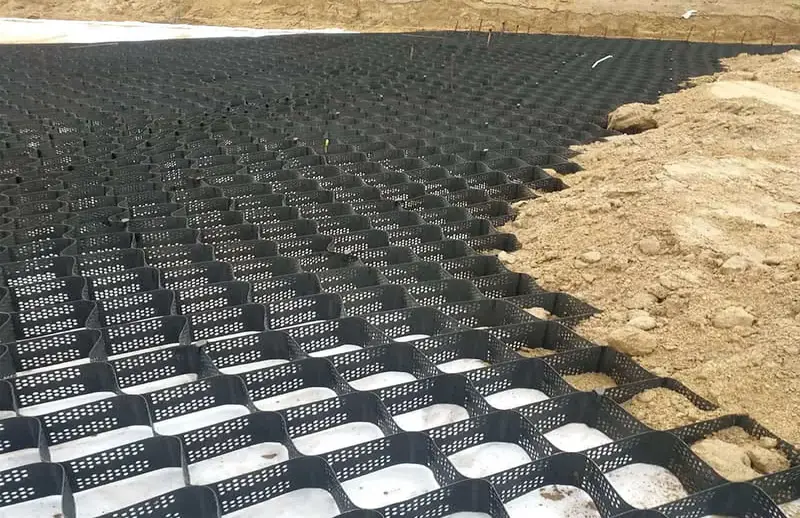
geocell road construction
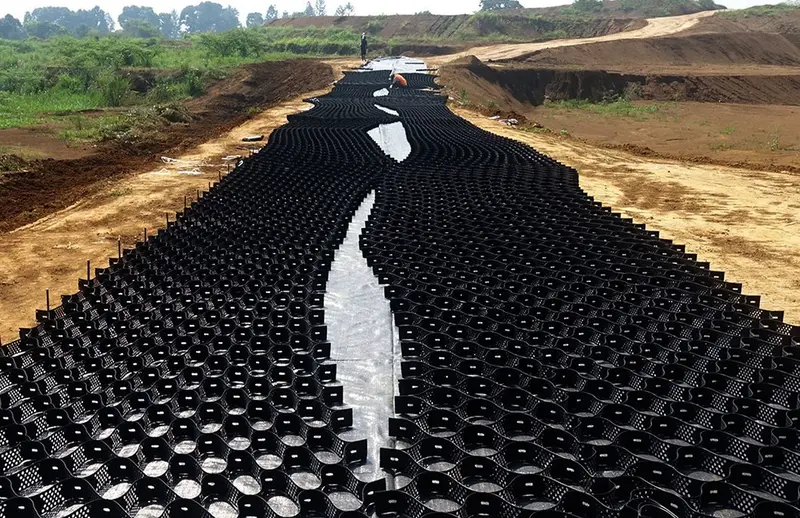
geocell road construction
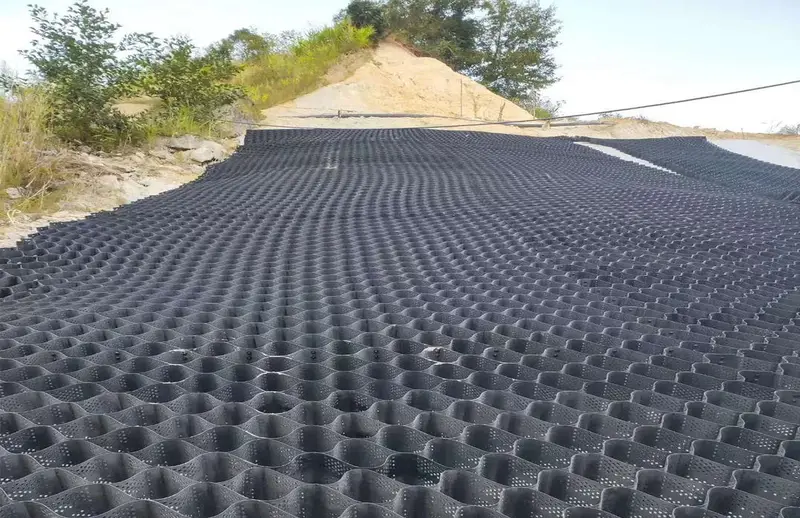
geocell road construction
Geocell-based road construction offers a range of compelling benefits that contribute to its widespread adoption in infrastructure projects around the world.
Optimized Load Distribution
By reinforcing the base course, geocells enable roadways to support heavy vehicles—such as trucks and buses—without compromising long-term performance. The result is smoother, safer pavements that retain their serviceability over extended periods.
Erosion Mitigation
Infrastructure incorporating geocells exhibits heightened resilience to washouts and slope failures, ensuring sustained stability. These attributes render geocells particularly suitable for projects in hilly or flood-vulnerable areas, where erosion would otherwise necessitate frequent and costly interventions.
Extended Service Life
By establishing a mechanically stable foundation, geocells bolster the overall durability of road structures. Pavements constructed with geocell reinforcement are less prone to rutting, cracking, and pothole formation, thereby reducing the frequency of remedial maintenance.
This enhanced longevity translates into reduced lifecycle costs and improved safety for end-users. Over the long term, the durability conferred by geocells can appreciably prolong a roadway’s operational lifespan.