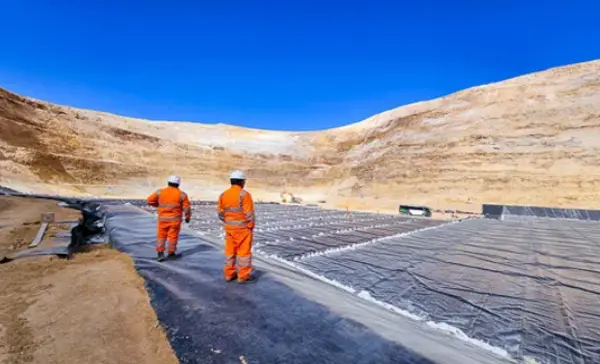
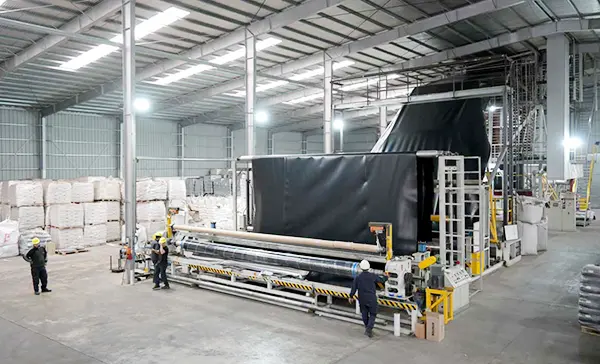
Geocell Ground Grid
Light material, wear resistance, stable chemical performance, light and oxygen aging resistance, acid and alkali resistance,suitable for different soil and desert and other soil conditions.


Geocell Ground Grid
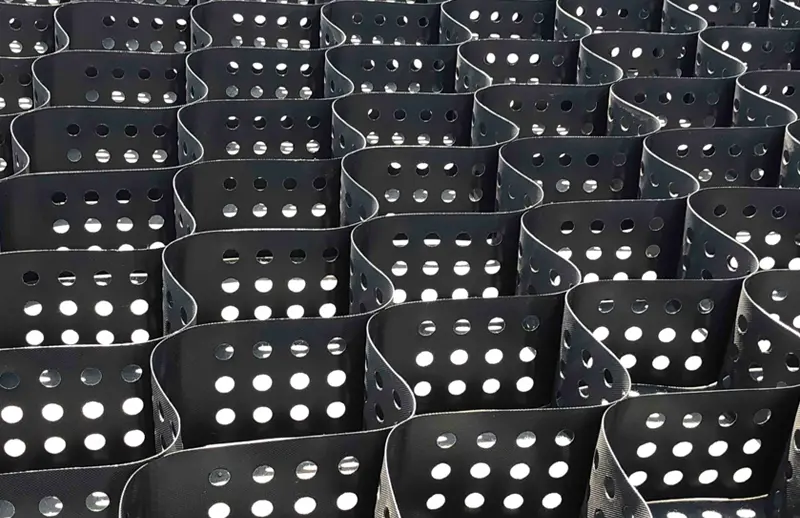
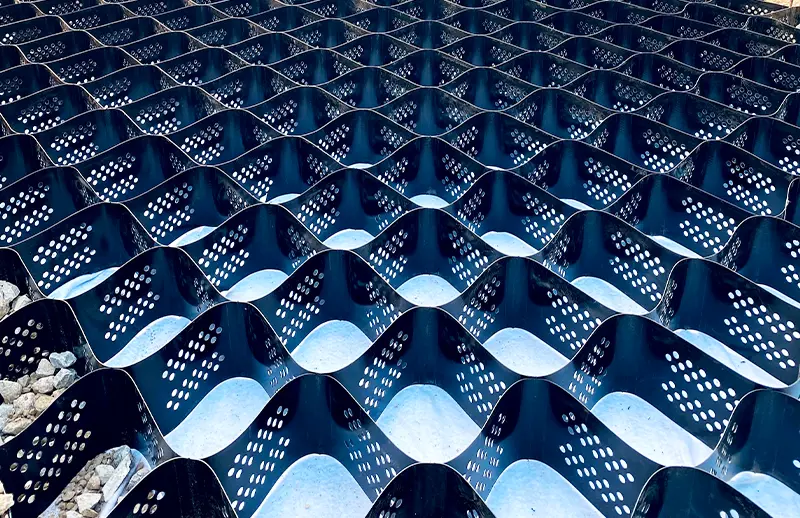
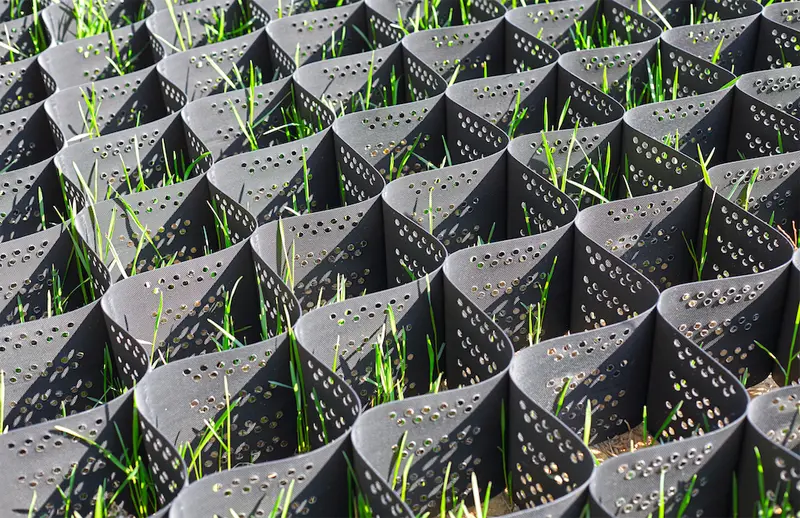
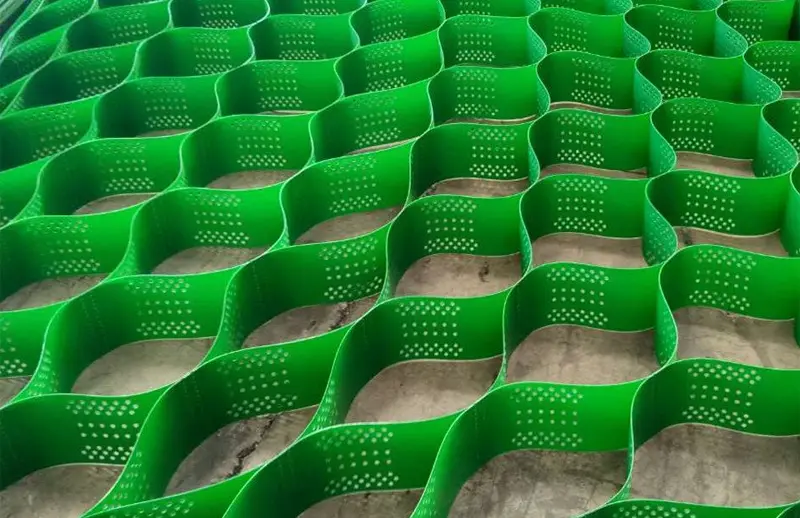
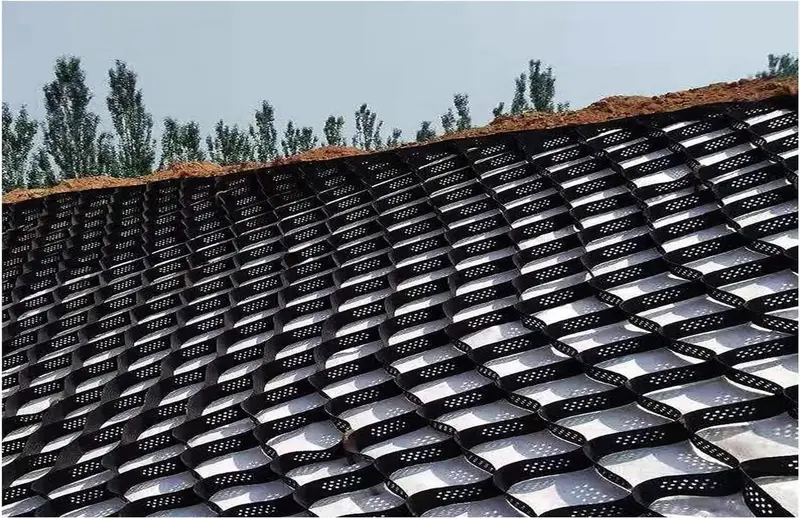
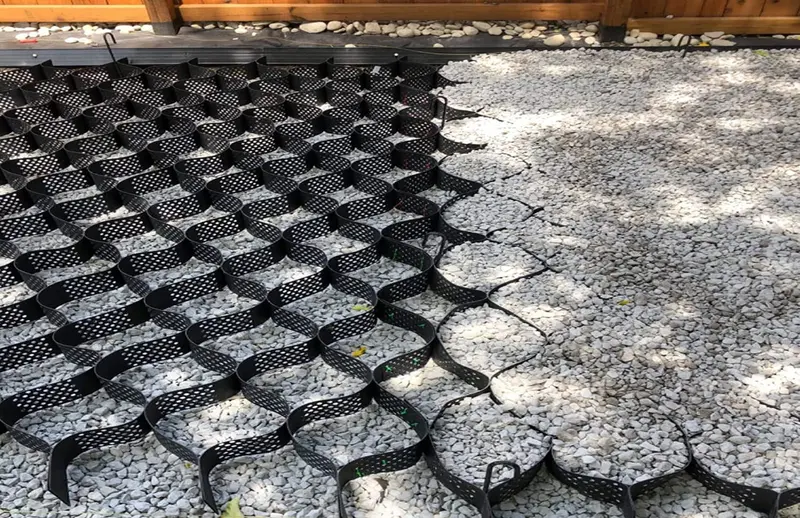
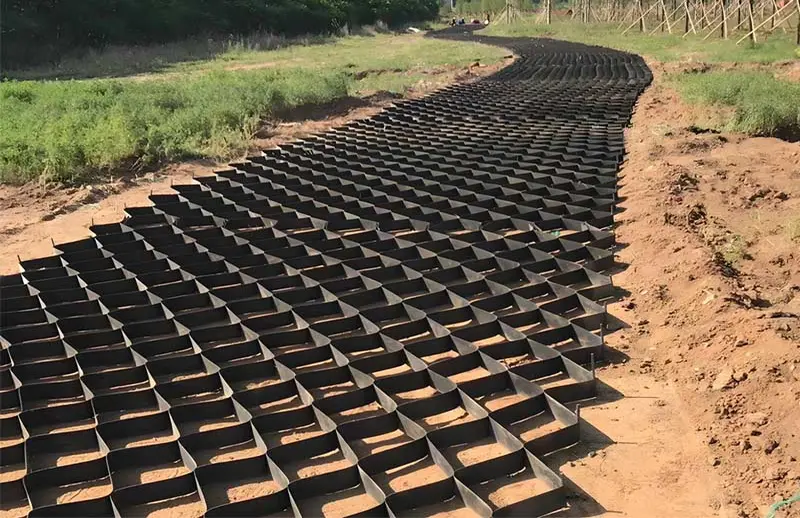
The performance of a geocell ground grid is based on the principle of three-dimensional confinement. When infill material is placed inside the geocell ground grid pockets, the cell walls restrict the lateral movement of soil particles. As a result, any vertical load applied to the surface is redistributed over a wider area.
This confinement mechanism significantly reduces horizontal deformation and improves the shear strength of the infill material. The interaction between adjacent cells creates passive resistance, while the hoop strength of the geocell ground grid walls further enhances load transfer. Together, these effects form a stiff, semi-rigid mattress that distributes loads efficiently and limits settlement.
By maintaining the density and integrity of the compacted infill, geocells ground grid improve the overall bearing capacity of weak or loose soils and reduce rutting, erosion, and long-term deformation.
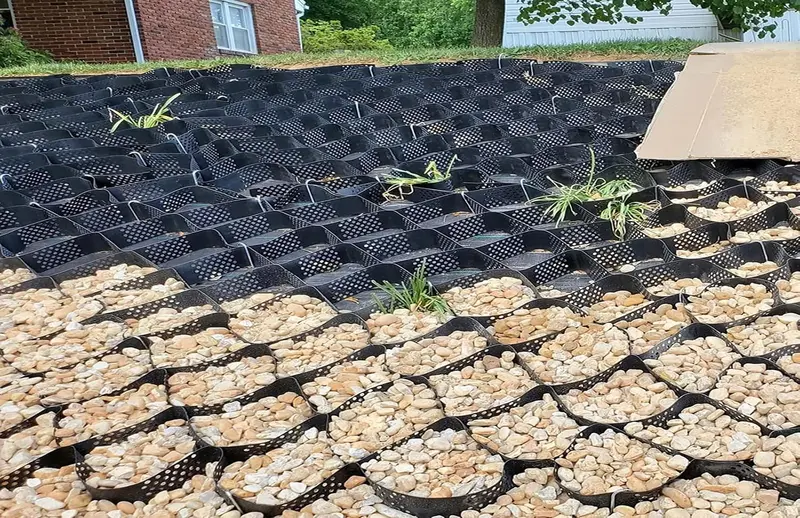
geocell ground grid
In numerous construction scenarios, challenging site conditions such as weak subgrades, expansive soils, steep terrain, or zones susceptible to erosion render traditional soil stabilization methods either cost-prohibitive or technically unfeasible. Geocells ground grid offer a robust alternative by forming a confined, reinforced layer that significantly enhances the load-bearing capacity and overall performance of the underlying soil, thereby reducing the need for extensive excavation or material replacement.
By effectively confining locally available infill materials, geocells ground grid minimize dependence on high-quality granular aggregates and reduce the required thickness of overlying pavement structures. This approach yields substantial material savings, accelerates construction timelines, and reduces the environmental footprint associated with earthworks and material transport. In slope and embankment applications, geocell ground grid reinforcement facilitates the construction of steeper and more stable slopes, providing effective resistance against lateral forces induced by traffic loading, hydraulic action, or seismic events.
Given these advantages, geocell ground grid are extensively employed in applications requiring enhanced soil performance and long-term durability, including subgrade stabilization, erosion control, slope protection, and load support infrastructure.
geocell ground grid
The Specifications of Geocell Ground Grid
| Index Properties | Test Method | Units | Values | ||||||||||||
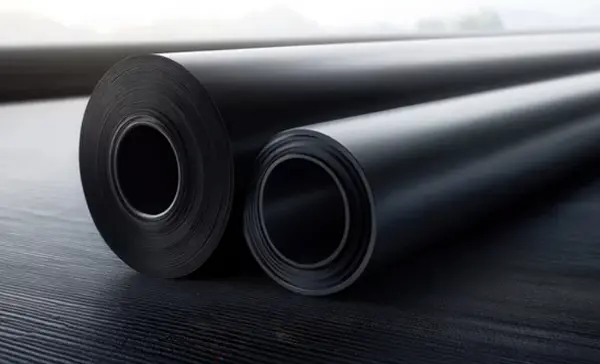
| Material | 100% Virgin HDPE | ||||||||||||||
| Carbon Black Content | ASTM D 1603 | % | ≥1.5 | ||||||||||||
| Density | ASTM D 1505 | g/cm3 | 0.935-0.965 | ||||||||||||
| Sheet Thickness +5% | ASTM D 5199 | mm | 1.5 | ||||||||||||
| Seam Peel Strength | USACE GL-86-19 | KN/m | ≥14.2 | ||||||||||||
| Tensile Strength at Yield | ASTM D 638 | KN/m | ≥22 | ||||||||||||
| Environmental Stress Crack Resistance ESCR | ASTM D 1693 | hrs | ≥5000 | ||||||||||||
| Oxidation Induction Time OlT | ASTM D 3895 | min | ≥150 | ||||||||||||
| Type No. | DK330 | DK356 | DK445 | DK660 | DK712 | ||||||||||
| Welding Distance(mm)3% | 330 | 356 | 445 | 660 | 712 | ||||||||||
| Cell Depth(mm)+3% | 50,75, 100,150,200,250 | ||||||||||||||
| Dimensions | |||||||||||||||
| Expanded Cell Size (widthxlength)(mm)+3% | 250×210 | 260 x225 | 320 x 288 | 470×450 | 510×475 | ||||||||||
| Expanded Cell Numbers (widthxlength) | 10×34 | 9 x 34 | 8 x 34 | 5 x34 | 5 x 34 | ||||||||||
| Expanded Section Size (widthxlength)(m)+3% | 2.50 x7.14 | 2.34 x 7.65 | 2.56 x 9.8 | 2.35 x 15.3 | 2.55 x 16.15 | ||||||||||
| Expanded Section Area (m2)+5% | 17.85 | 17.9 | 25.1 | 36 | 41.2 | ||||||||||
Geocell Ground Grid
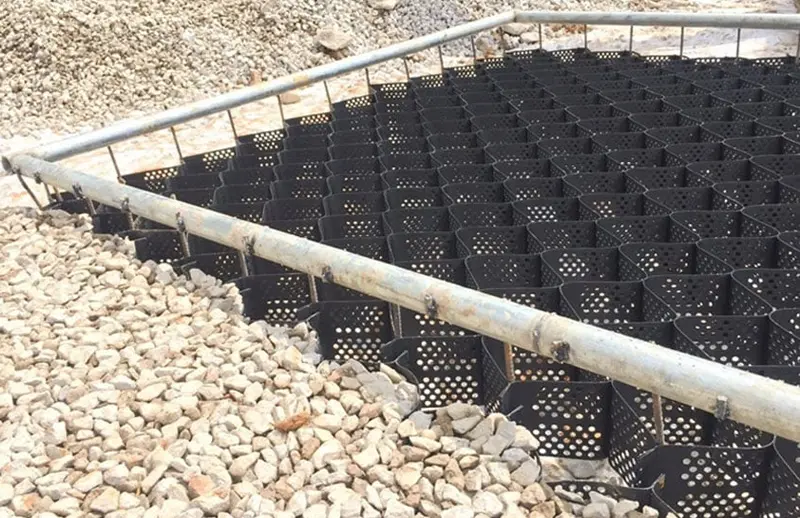
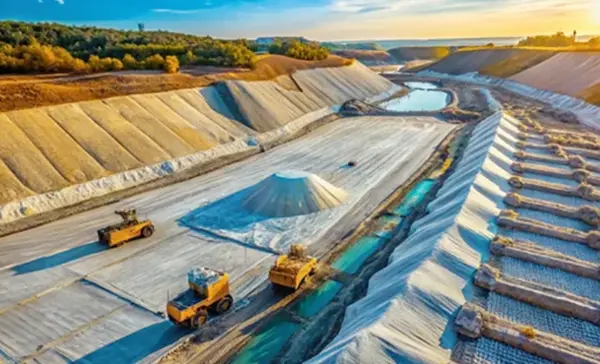
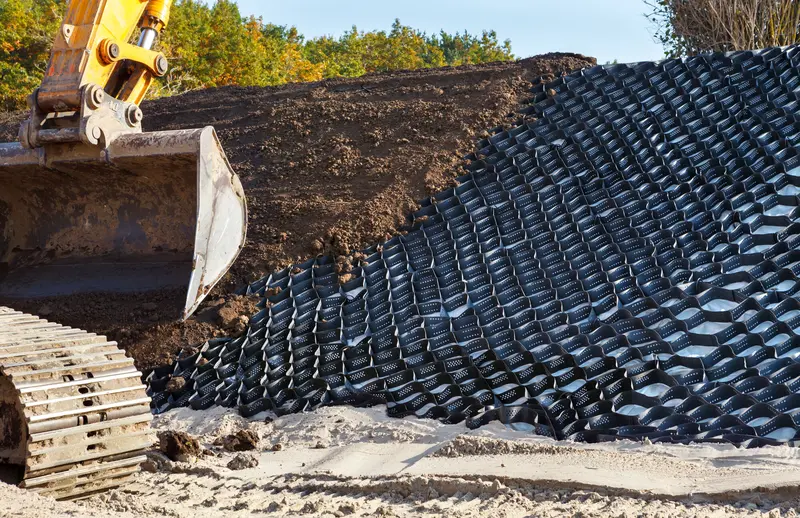
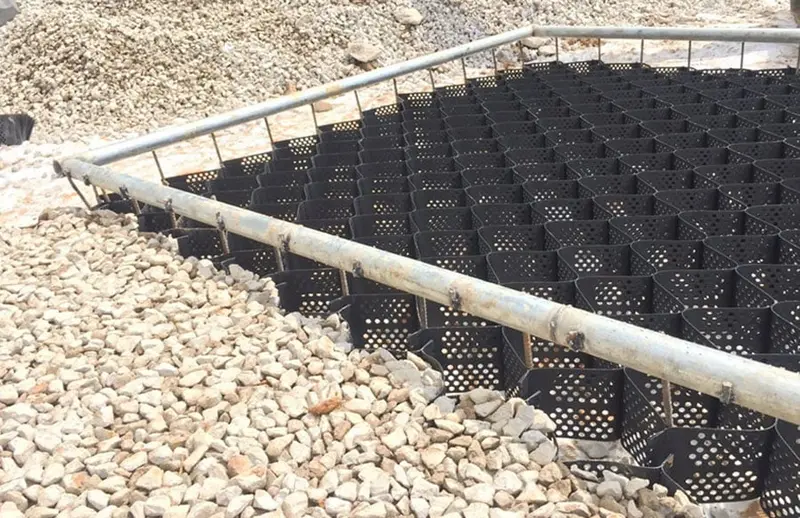
Geocells are utilized across a diverse spectrum of geotechnical and civil engineering applications. On horizontal surfaces, they are deployed in pavement systems, railway track beds, industrial storage yards, and load-support platforms, where they enable significant reductions in aggregate layer thickness while enhancing performance under cyclic loading. In such contexts, geocells facilitate uniform distribution of traffic-induced stresses and effectively restrain the lateral displacement of infill materials.
- Road support: Solve problems on damaged roads, parking lot and yard; Applications include asphalt pavements, service roads, railway substructure, parking facilities and emergency access areas, among
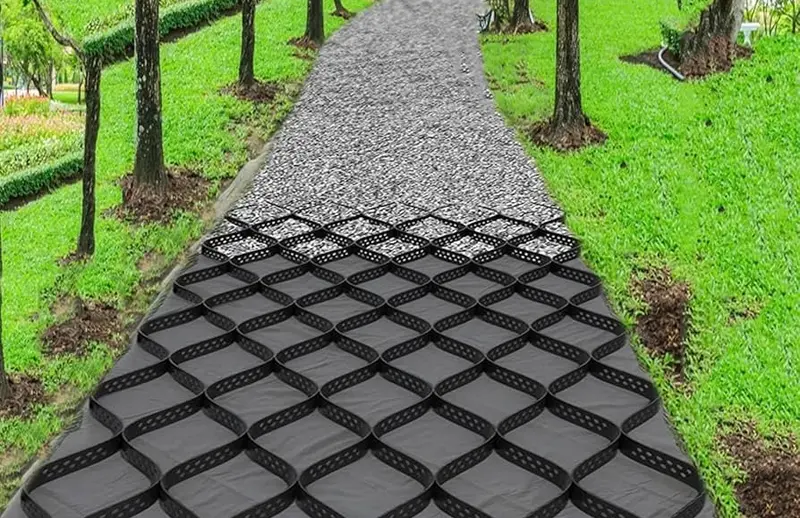
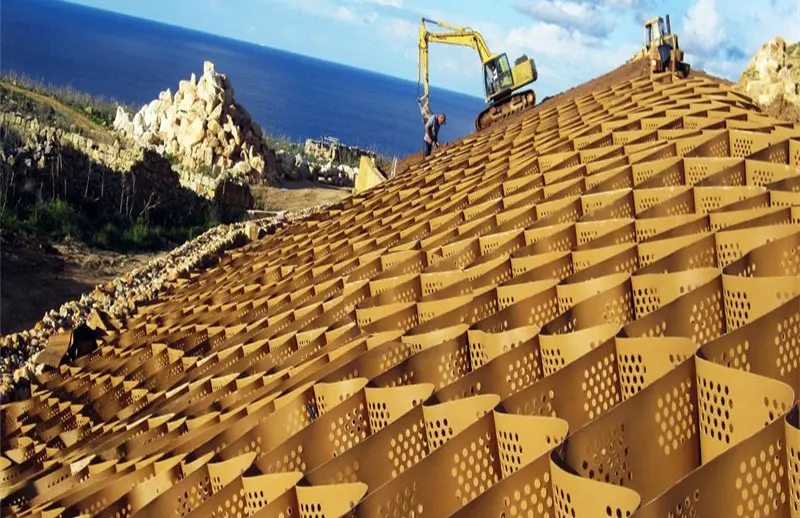
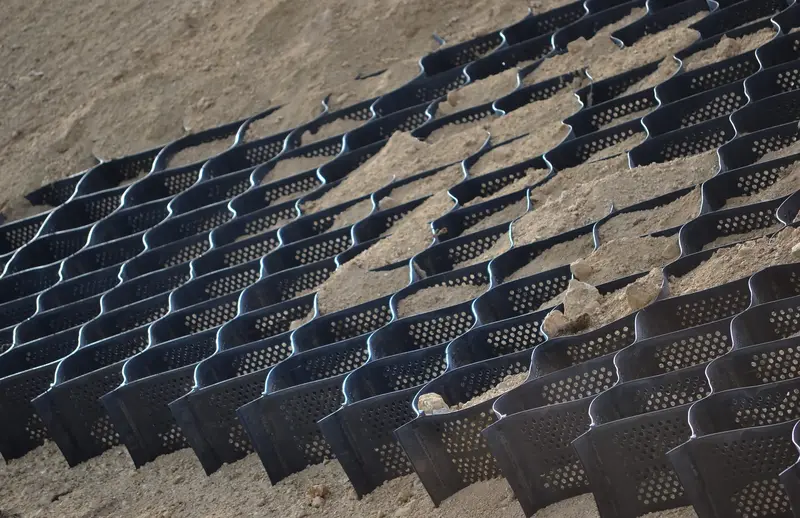
others. - Slope protection: Create a stable environment for long-term sustainability of embankment material; The three-dimensional lateral confinement of Cellular Confinement Systems along with anchoring techniques ensures the long-term stability of slopes using vegetated topsoil, aggregate or concrete surfacing
- Channel protection: Ensure stability and protection of chanels exposed to all types of erosive conditions;
- Vegetated retaining walls: Inclueds steep slopes, retaining walls, gravity walls and so on.
- Gruound Stabilisation: Cellular Confinement Systems strengthen the aggregate infill, thereby simultaneously enabling the use of poorly graded inferior material for infill as well as reducing the structural support layer thickness.Typical stabilisation applications include reinforcement of base and subbase layers in flexible pavements, including: roads, railway substructure and ballast confinement;working platforms in intermodal ports; airport runways.
geocell ground grid
geocell ground grid
geocell ground grid
geocell ground grid