
Geotextile Membrane
Material:PET/PP
Surface:Filament/Short Fiber
Width:1-6m
Length:50/100/150/200/Customized
Weight:100-1200gsm


- Woven Membrane
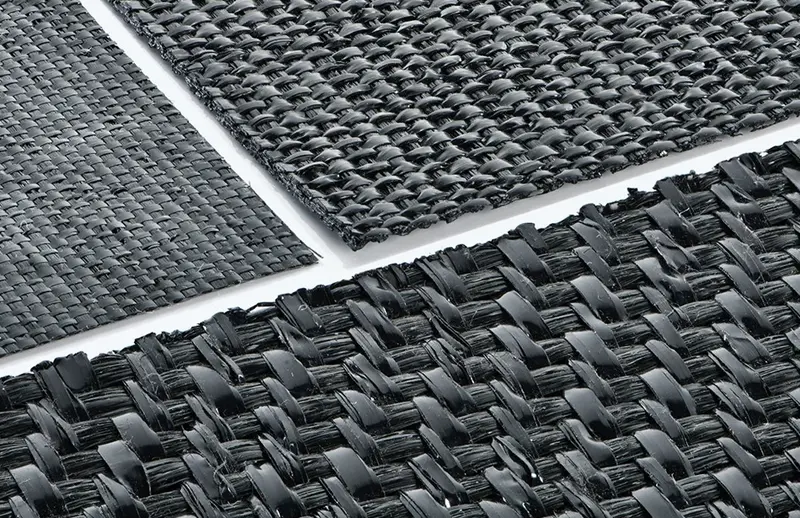
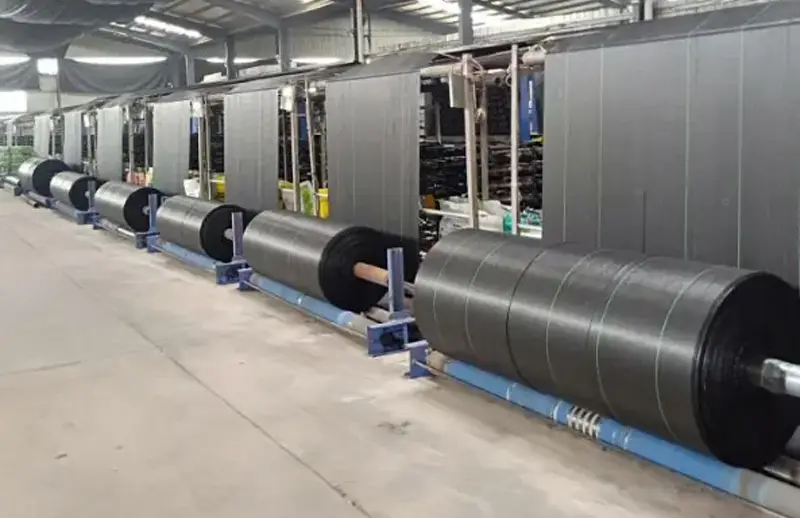
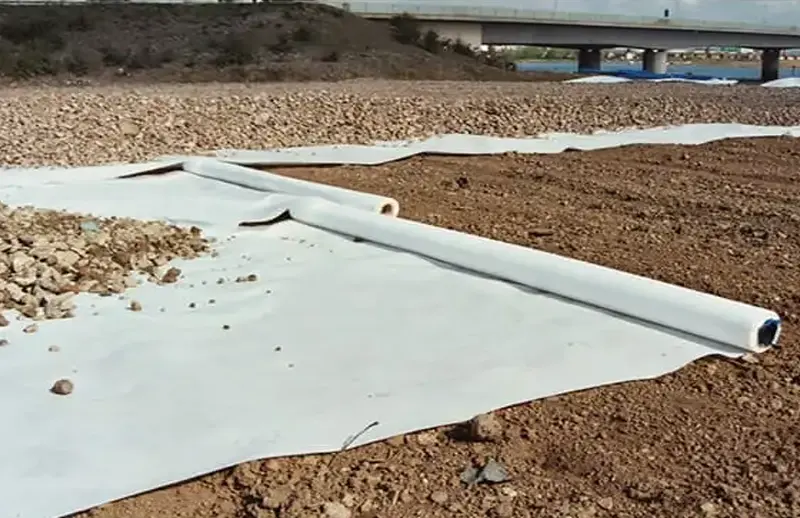
As the name implies, woven geotextiles membrane are manufactured by interlacing individual threads or tapes of polymer material on a loom to form a continuous sheet. Compared to non-woven varieties, woven geotextiles membrane offer greater overall tensile strength, increased stiffness, and generally lower production costs.
Due to their enhanced mechanical properties, woven geotextiles membrane exhibit a higher load-bearing capacity. Consequently, they are commonly employed in the construction of roads, embankments, and railways to reinforce and stabilize structural layers, ensuring separation between materials and preserving the long-term integrity of the structure. In the absence of such a separation layer, repeated load stresses would gradually force the granular aggregate into the underlying soft subgrade, leading to rutting and potential localized subsidence of the pavement or structure. Although all geotextiles membrane are permeable and allow water to pass through, woven types are generally less effective at filtration compared to their non-woven counterparts.

geotextile membrane

geotextile membrane
- Non-woven geotextiles
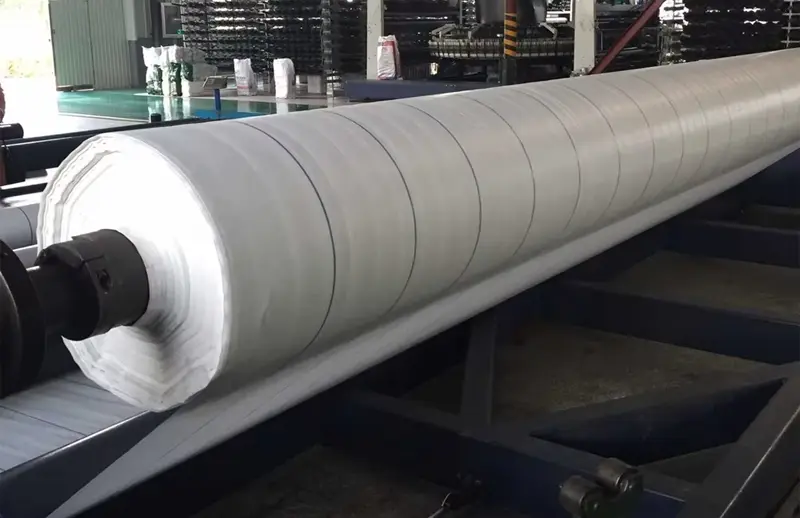
Non-woven geotextiles memebrane are produced by bonding synthetic fibers together through needle-punching or heat-bonding processes to form a unified sheet. They possess less rigidity compared to woven types, and while their applications may overlap, non-wovens are typically specified where lower load-bearing capacity is acceptable. Their primary advantage lies in superior filtration performance, which makes them especially suitable for drainage applications. Non-woven geotextiles efficiently permit water passage while preventing the migration of fine soil particles; therefore, they are most commonly used to wrap and protect soakaway crates and land drains. Additionally, they are frequently installed beneath domestic patio and block paving bases to maintain separation between the granular sub-base and the subgrade while still allowing unimpeded drainage.

geotextile membrane

geotextile membrane
Geotextile Membrane
| Index Properties | Test Method | Unit | Values | ||||||||
| 150 | 200 | 250 | 300 | 350 | 400 | 450 | 500 | 600 | |||
| Color | – | – | White or Black | ||||||||
| Ultimate Tensile Strength, MD | ASTM D4595 | kN/m | 11 | 14 | 17 | 19 | 24 | 27 | 30 | 37 | 41 |
| Ultimate Tensile Strength, TD | ASTM D4595 | kN/m | 10 | 12 | 15 | 17 | 21 | 25 | 28 | 34 | 38 |
| Tensile Elongation | ASTM D4595 | % | 45 | 50 | 50 | 50 | 60 | 60 | 60 | 60 | 60 |
| Grab Tensile Strength, MD | ASTM D4632 | N | 600 | 850 | 1000 | 1250 | 1450 | 1700 | 1900 | 2100 | 2500 |
| Grab Tensile Strength, TD | ASTM D4632 | N | 550 | 700 | 900 | 1100 | 1250 | 1450 | 1600 | 1800 | 2150 |
| Grab Elongation | ASTM D4632 | % | 45 | 50 | 50 | 50 | 60 | 60 | 60 | 60 | 60 |
| Trapezoid Tear Strength, MD | ASTM D4533 | N | 300 | 350 | 430 | 490 | 540 | 630 | 710 | 770 | 920 |
| Trapezoid Tear Strength, TD | ASTM D4533 | N | 270 | 330 | 400 | 450 | 510 | 610 | 690 | 750 | 900 |
| CBR Puncture Strength | ASTM D6241 | N | 1800 | 2300 | 2700 | 3200 | 3600 | 4400 | 4800 | 5800 | 6900 |
| Apparent Opening Size O90 | ASTM D4751 | mm | 0.11 | 0.11 | 0.1 | 0.09 | 0.09 | 0.08 | 0.08 | 0.08 | 0.08 |
| Water Flow Q100 | ASTM D4491 | L/m2/s | 235 | 220 | 200 | 185 | 165 | 125 | 110 | 90 | 80 |
| U.V. Resistance | ASTM D4355 | % @ 500h | 70 | 70 | 70 | 70 | 70 | 70 | 70 | 70 | 70 |
| Weight | ASTM D5261 | g/m2 | 150 | 200 | 250 | 300 | 350 | 400 | 450 | 500 | 600 |
| Thickness | ASTM D5199 | mm | 1.8 | 2.3 | 2.9 | 3.2 | 3.6 | 3.9 | 4.2 | 4.4 | 4.8 |
| Roll Length | – | m | 50-200 | ||||||||
Geotextile Membrane
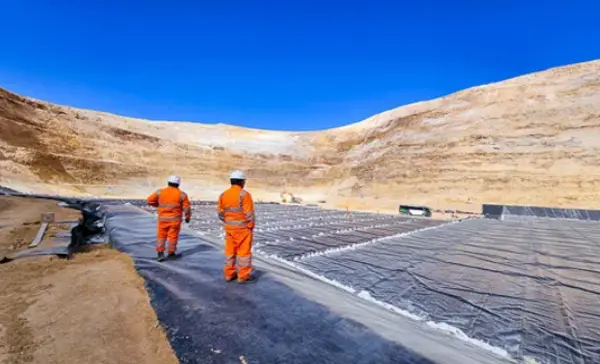
- Road Construction: Placed between the subgrade (soft soil) and the aggregate base course. It prevents the stone from punching into the underlying soil, preserving the designed thickness of the road and preventing rutting.
- Railways: Installed between the ballast and the subgrade to maintain track stability and drainage capacity.
- Retaining Walls: Placed behind retaining walls to allow groundwater to seep out freely while preventing the washout of fine soil particles from the backfill.
- Soakaway Crates: Wrapping stormwater crates to prevent surrounding soil from entering the void space, ensuring long-term water storage capacity.
- Road Bases: Reinforcing weak subgrades to increase the load-bearing capacity of the road, allowing for thinner aggregate layers.
- Asphalt Reinforcement: Placing paving fabric between asphalt layers to reflect crack prevention and extend pavement life.
- Coastal & River Banks: Placed beneath riprap (rock armor) to prevent wave action from washing out the underlying soil through the gaps in the rocks.
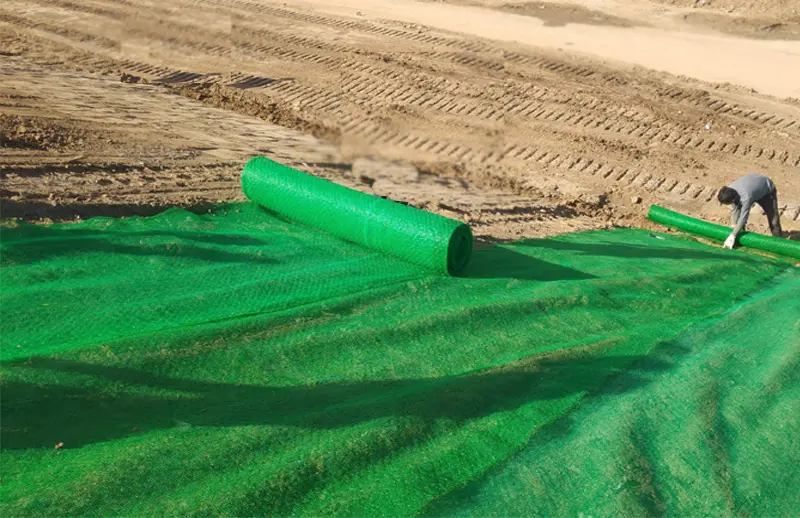
- Slope Stabilization: Used in conjunction with vegetation to hold soil in place while roots establish.

geotextile membrane

geotextile membrane

geotextile membrane

geotextile membrane